Fruit handling
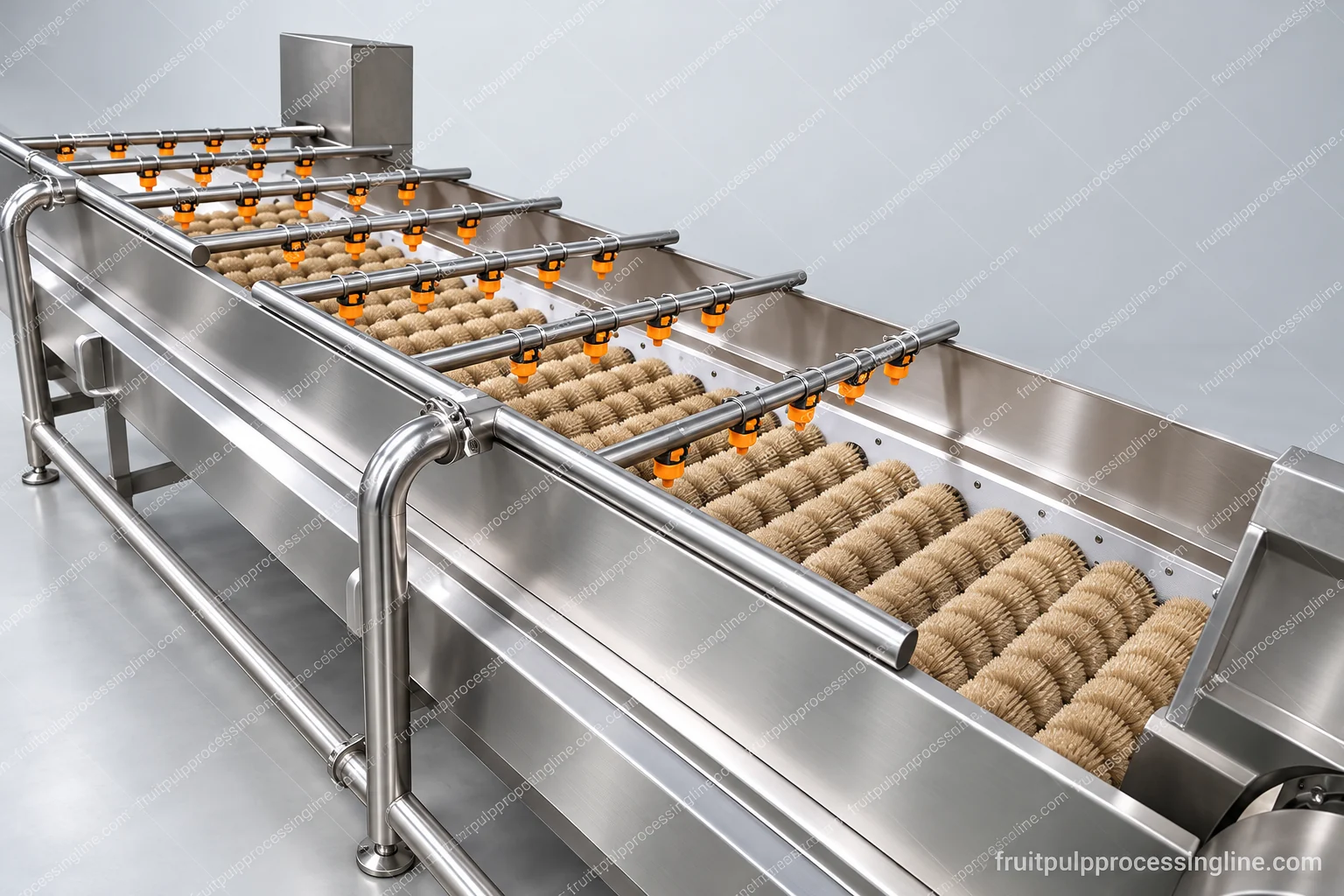
Brush and Spray Washer
Parallel brush rollers and overhead sprays provide an open washing zone before inspection and fruit-specific preparation.
View machineAn accessible conveyor work area supports manual inspection and preparation of mangoes before machine processing.
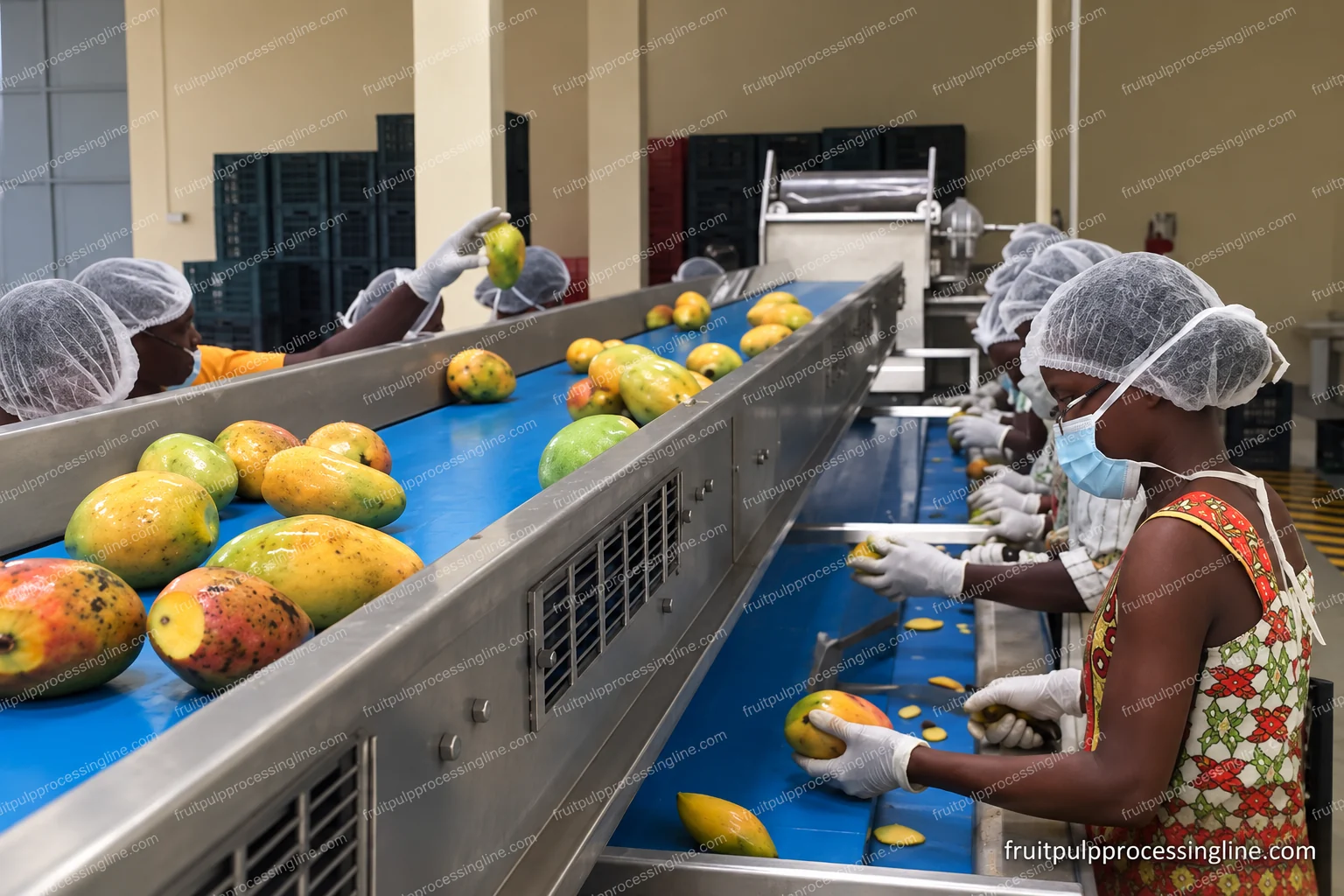
Define access on the required sides, rejection collection and the transition into the next machine. The scope of manual cutting or trimming follows the work-station arrangement. No automatic peeling, optical grading, automatic ripeness recognition or quantified defect-removal rate is established by this arrangement.
Whole mangoes presented so operators can inspect the incoming condition.
Selected mangoes for preparation; rejected fruit leaves through a separately planned collection route.
The conveyor presents fruit to the inspection positions. Operators remove unsuitable material and can trim or prepare fruit at the designated work positions before the recovery stage. Working width, presentation depth and removal access determine whether that inspection can keep pace with the selected fruit feed.
The washer discharge should deliver an inspectable stream. Keep reject containers outside drive guards and walkways, and provide a clear feed-stop arrangement when the receiving hopper cannot accept fruit.
Isolate the conveyor before clearing return-side material. Clean the belt, reachable frame and reject collection points. Operator areas and wet floors need a drainage and access layout as well as a machine wash-down method.
Whole mangoes under an agreed cultivar, maturity and receiving condition.
Parallel brush rollers and overhead sprays provide an open washing zone before inspection and fruit-specific preparation.
View machine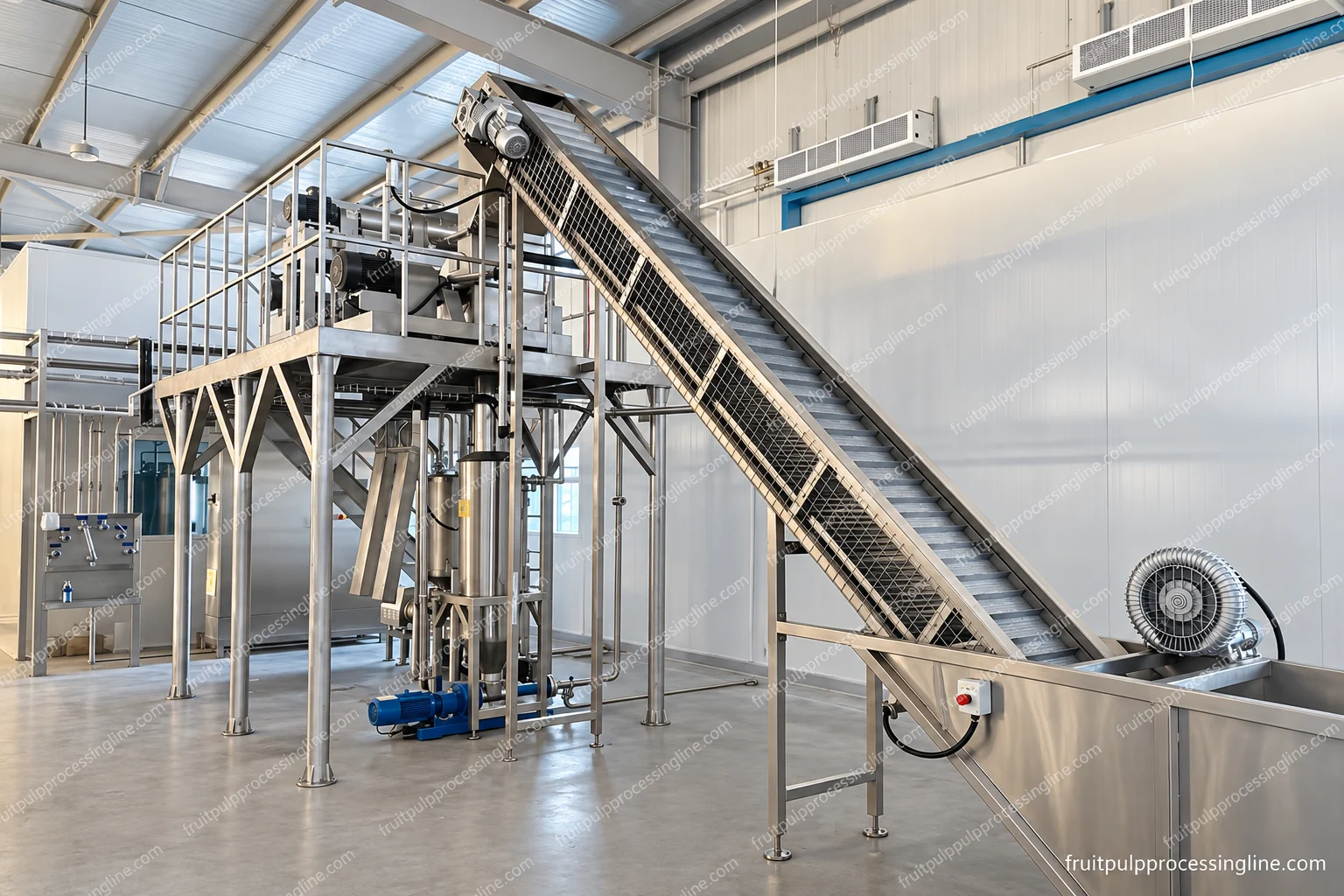
A flighted inclined belt transfers suitable fruit from a lower receiving or washing point to a higher process inlet.
View machine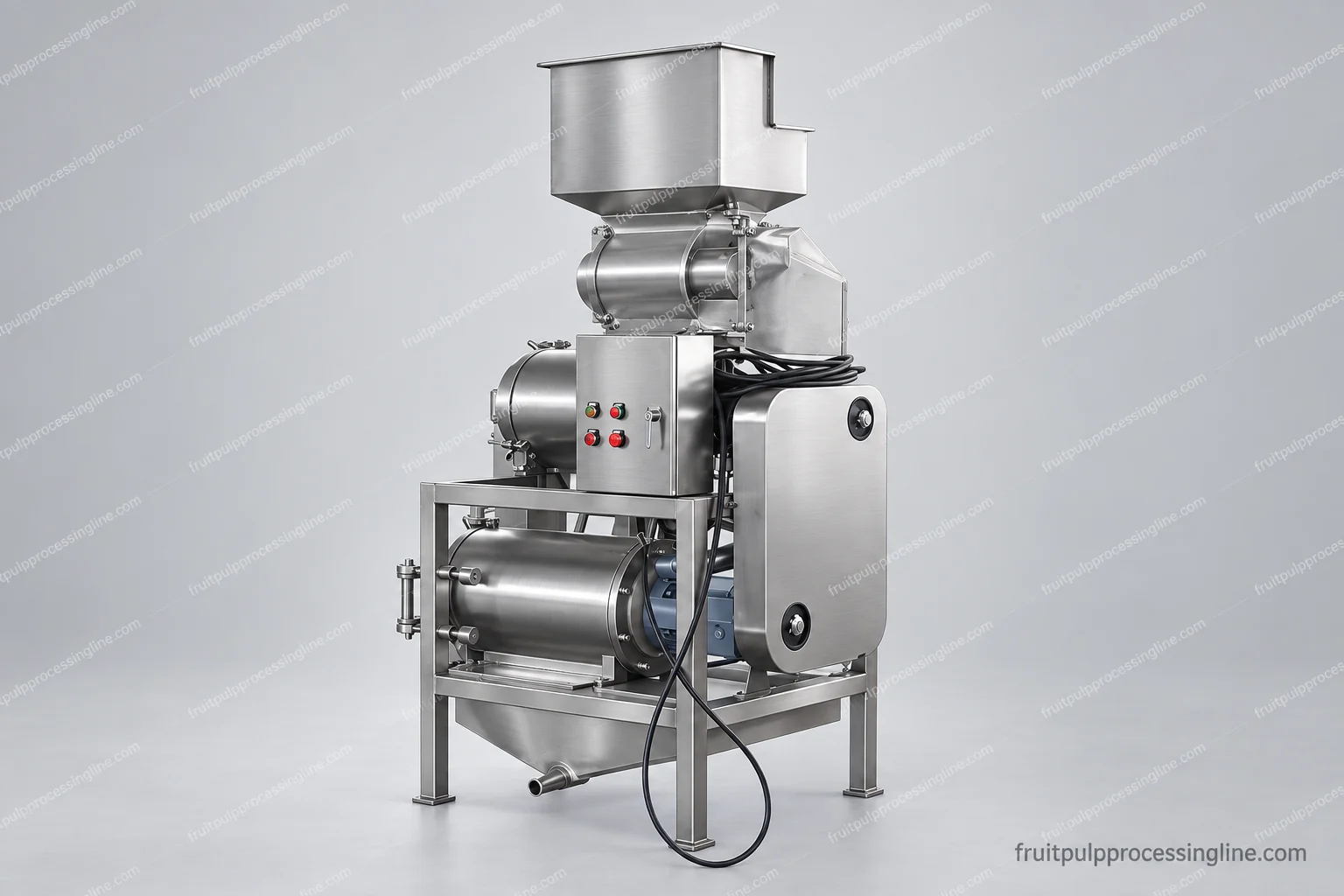
A mango preparation family combines controlled feeding and separation duties to recover flesh ahead of downstream screening.
View machineTell us about the equipment or product you have in mind.