Preparation and access
Fix receiving levels, reject collection and maintenance space around the destoner and removable screening parts.
An equipment route from inspection and mango-specific flesh recovery to screened pulp, with the treatment and bulk-packing scope selected for your product.
Track whole-fruit input in kg or t separately from qualified pulp output. Stone, peel and screening rejects leave the route; additions and retained material change the balance. Machine input references are not a finished-pulp line guarantee.
Discuss this lineSelect a washing contact that suits the mango skin and firmness, then present fruit for inspection. Include an elevator only where the physical receiving levels require a rise.
The mango-specific preparation assembly separates useful flesh and unwanted fractions. Provide unobstructed stone and peel collection rather than sending those hard fractions to a general pulper.
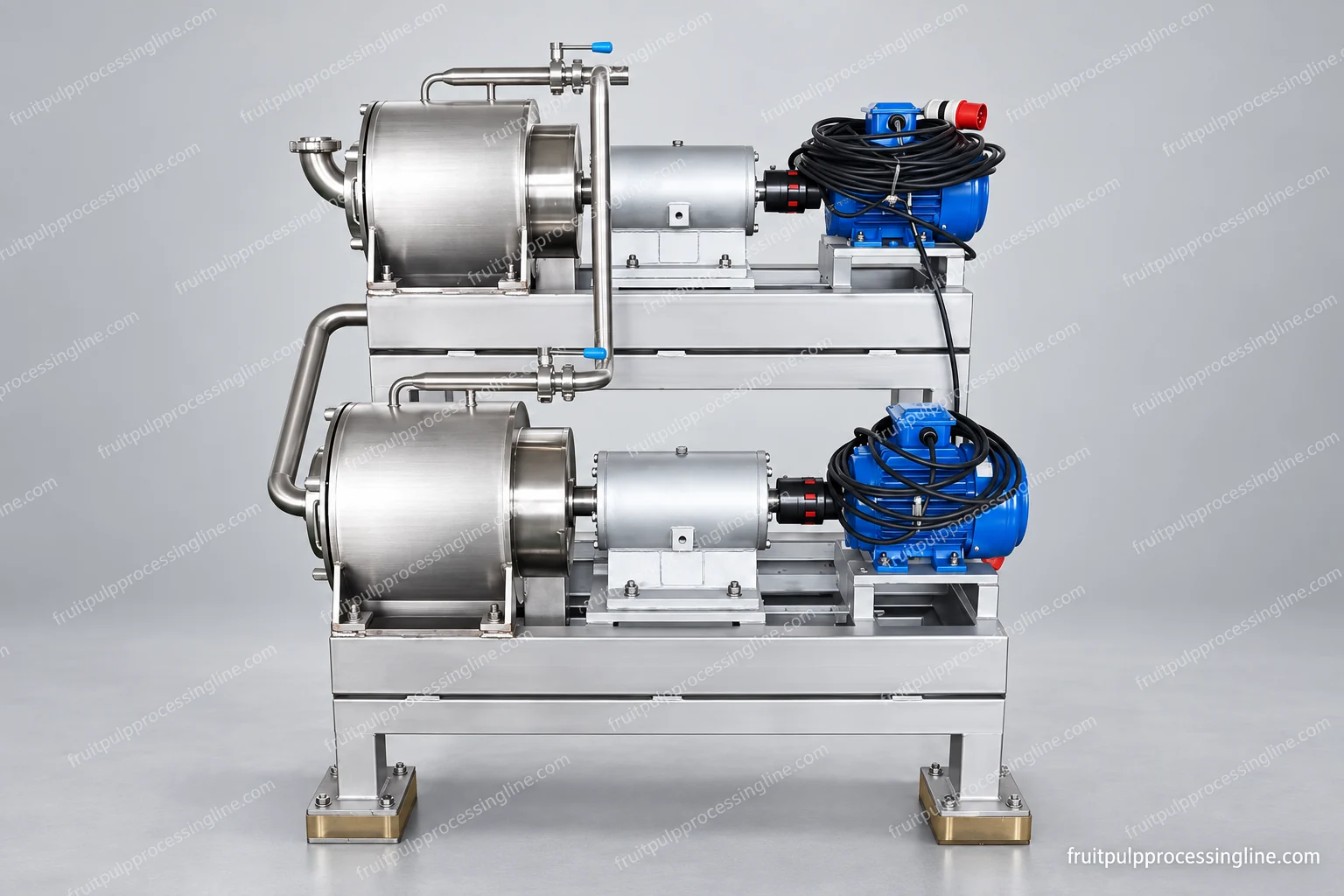
The two-stage assembly recovers pulp and performs further screening. Choose stage and screen duties around the finished texture, not a universal smallest-aperture rule.
Buffer the recovered pulp and provide a stable transfer. Vacuum deaeration is included where air, foaming and the product assessment justify it.
Connect the specified thermal duty to compatible bag filling when aseptic bulk packing is the chosen endpoint. A bulk-transfer endpoint is a different supply boundary.
CIP supply and return connect to the closed product route. Open fruit handling and removable screening parts also need their own cleaning access.
Three-tank CIP systemFix receiving levels, reject collection and maintenance space around the destoner and removable screening parts.
Schedule wash water, drains, electrical drives, thermal/cooling services and the filling-head services for the selected assemblies.
Assign thermal-process verification and the filling/fitment boundary together. A bag-volume label does not specify the preservation process.
The equipment list separates included machines, optional modules, joining pipes/pumps and customer-retained assets. Layout and test conditions are developed for the selected fruit; this route diagram is not presented as a completed customer installation.
A representative run records incoming fruit, recovered pulp, rejects, texture and time under one configuration. Functional machine checks, product trials and final process acceptance remain separate records.
How to record capacity Engineering reviewTell us about the equipment or product you have in mind.